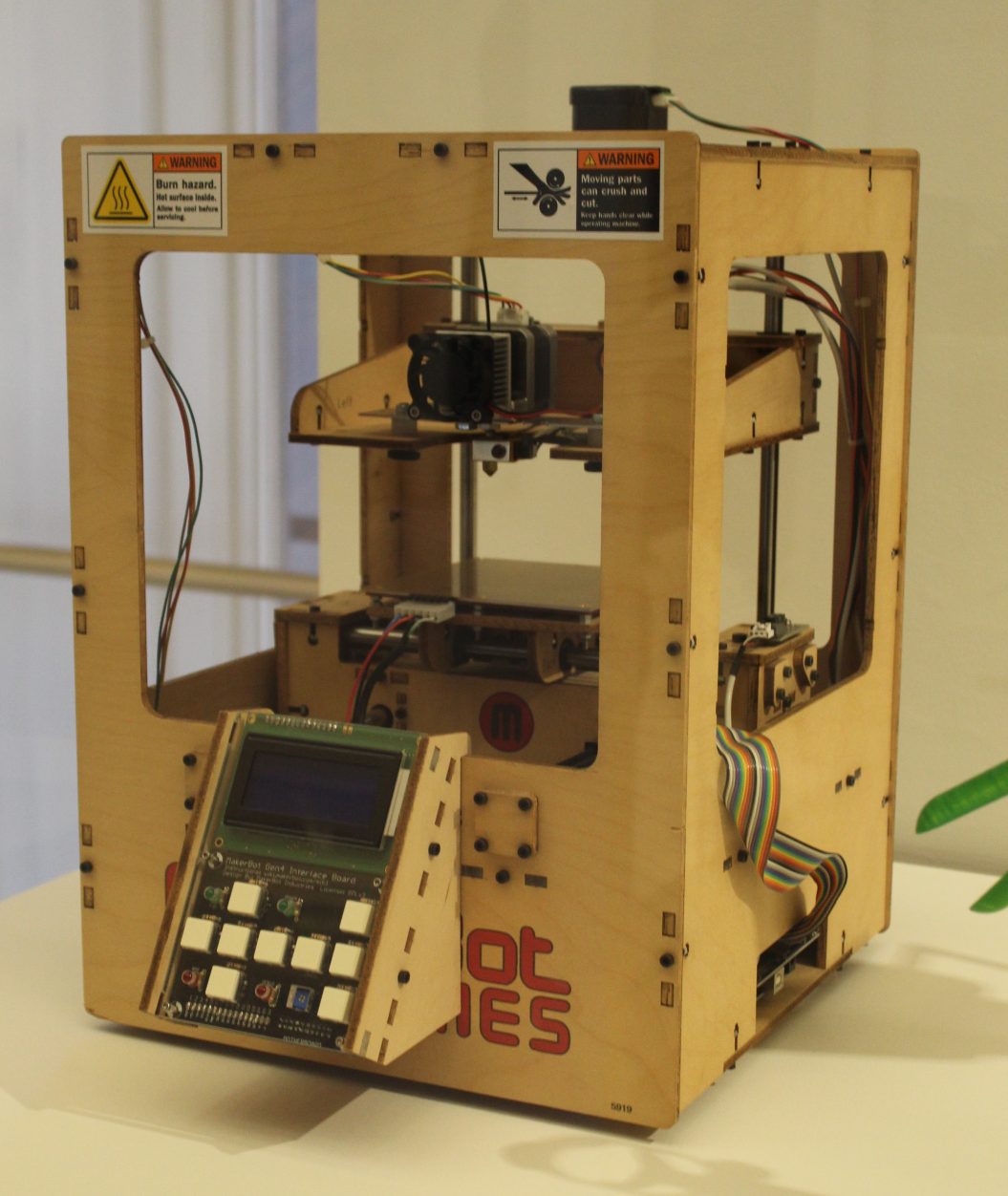
3D Printing and the Law: Democratising Manufacturing, Intellectual Property and New Questions of Liability
Imagine being able to produce a replacement part for an obsolete household appliance, a prosthetic device adapted to someone’s individual needs, or a detailed architectural model at home. In many cases, the object need not even exist physically in the same place as the person manufacturing it. A digital design file, appropriate materials and a suitable 3D printer can make local production possible.
This is an important shift. Manufacturing is no longer confined to large factories or specialised industrial producers. Designers, students, small businesses and individual users can take part in the production of physical objects on a scale that was previously difficult to imagine.
But making manufacturing more accessible does not eliminate legal questions. It brings issues traditionally associated with industrial production into homes, workshops and online communities.
Is downloading a digital model legally equivalent to copying a physical product? Can someone 3D-print a patented or design-protected spare part for personal use? Does the fact that a design file is freely available on the internet mean it can be lawfully reproduced or sold? Who should be responsible if a printed medical device, automotive component or other product causes injury? And how should the law address files that facilitate the production of firearms, without disregarding the importance of freedom of expression?
In my view, the significance of 3D printing cannot be reduced to the possibility of copyright infringement or unlawful manufacturing. The more fundamental issue is how the law should distribute rights, responsibilities and risks when the means of production become accessible to individuals.
1. From factories to desktops: why 3D printing matters
Three-dimensional printing, often described more broadly as additive manufacturing, produces physical objects from digital models by adding material, commonly in successive layers. Different processes employ different materials and technologies, and their applications extend well beyond consumer desktop printers.
3D printing is now used for prototyping, architectural models, customised components, tooling, education, repairs and low-volume manufacturing. It can provide alternatives for producing parts that would be uneconomical to manufacture using traditional mass-production methods. Locally manufactured replacement components can also support repair and accessibility. Potential advantages in transport, material use and waste should nevertheless be assessed rather than assumed: environmental outcomes depend on materials, energy and manufacturing conditions.
Healthcare provides particularly compelling examples. The United States Food and Drug Administration (FDA) identifies orthopaedic and cranial implants, surgical instruments, dental restorations and external prosthetics among the applications of additive manufacturing. Its December 2017 guidance addresses technical considerations including design, production-process validation, materials and testing [1].
However, the ability to print an object is not the same as establishing that the resulting product is safe or suitable for a medical purpose. The democratisation of production makes quality control more important, not less. It also raises the question of who bears legal responsibility for that control.
2. When an object crosses a border as a file
Perhaps the most distinctive feature of digital manufacturing is that a product can be designed in one country, transmitted electronically to another and manufactured locally. The physical item no longer needs to cross the border.
The American decision in ClearCorrect Operating, LLC v. International Trade Commission illustrates the legal difficulty. In that case, digital models used in orthodontic treatment were prepared in Pakistan, transmitted electronically to the United States and used there to 3D-print physical models. The US International Trade Commission treated the transmissions as potentially falling within its authority over imported articles involved in patent infringement. In 2015, however, the US Court of Appeals for the Federal Circuit held that the relevant statutory concept of imported articles did not extend to electronically transmitted, intangible digital data [2].
The ruling must be understood in context. The court did not hold that digital manufacturing files are immune from intellectual property law. Its decision concerned the specific jurisdiction of the International Trade Commission under a particular importation provision.
Nevertheless, the case captures a broader difficulty: legal categories developed around the movement of physical goods do not necessarily translate smoothly into a system in which manufacturing instructions circulate online.
The file is not the finished object. But it may enable the object to be reproduced anywhere. The legal significance of this distinction increasingly depends on the particular right and remedy under consideration.
3. Intellectual property: a physical object may involve several rights
It is tempting to ask whether a 3D-printed product is “copyrighted”. Yet that question is often too narrow.
A product’s appearance may be protected by design rights; its technical mechanism by patents; an original sculptural element by copyright; and its name or distinctive commercial signs by trademark law. These rights have different requirements, exceptions and infringement tests. The person who created the digital model, the person entitled to rights in the finished object and the person who uploaded a file may also be different people.
Neither the three-dimensional nature of an object nor the availability of a CAD or STL file automatically determines its legal status.
3.1. Functional objects, sculpture and copyright
In Lucasfilm Ltd v. Ainsworth [2011] UKSC 39, the UK Supreme Court considered whether the Stormtrooper helmets made for the Star Wars films were sculptures under the relevant provisions of British copyright law. The Court concluded that the helmets, understood in their context as film costumes and props, were not sculptures for that statutory purpose [3].
This was not a case about 3D printing. Nevertheless, it remains a useful example of how difficult it can be to distinguish an artistic work from a functional or designed object. A person reproducing a similar object using 3D scanning and printing would still have to consider the applicable intellectual property rights; the decision cannot be treated as a general licence to reproduce film-related objects.
The Court of Justice of the European Union approached the protection of functional shapes from a different direction in Brompton Bicycle (Case C-833/18, 11 June 2020). It held that a product shape necessary, at least in part, to obtain a technical result may nonetheless attract copyright protection where it reflects the author’s free and creative choices and satisfies the originality requirement [4].
Together, these cases show why neither “functional objects cannot be copyrighted” nor “every distinctive 3D shape is protected” provides a reliable general rule. Copyright analysis remains dependent on the relevant legal system and the character of the claimed work.
3.2. The EU has begun addressing 3D-printing files expressly
One of the most important recent developments is Regulation (EU) 2024/2822, which reforms the EU design system.
Under the amended Article 19(2)(d), the rights conferred by an EU design may extend to preventing the creation, downloading, copying, sharing or distribution of a medium or software recording the protected design for the purpose of enabling an infringing product to be made. The relevant reform has applied since 1 May 2025 [5].
This provision does not impose a blanket prohibition on CAD files. Its wording connects the relevant acts to the purpose of enabling the manufacture of products that infringe the protected design, and the scope of protection and applicable limitations remain essential.
Its significance is nevertheless considerable. In some circumstances, legal scrutiny can begin before a physical item is ever printed, at the point where a digital design is prepared or circulated.
It is a recognition that manufacturing instructions may now play an economic role that once belonged almost exclusively to factories and distributors.
3.3. Is printing a spare part at home necessarily unlawful?
Not necessarily. But there is no universal personal-use exemption covering every intellectual property right and every jurisdiction.
Turkish law provides useful examples. Under Article 59(3)(a) of Industrial Property Code No. 6769, acts confined to private purposes and lacking a commercial purpose fall outside the scope of design rights. Article 85(3)(a) contains a comparable limitation concerning patents for acts confined to private purposes without an industrial or commercial purpose [6].
These distinctions matter. Printing one part for a private repair is not automatically equivalent to manufacturing hundreds of copies for sale. But an exception applicable to a design or patent does not necessarily dispose of copyright, trademark, contractual licensing or product-safety questions. The rights in a downloaded CAD file may require a separate analysis from the rights in the physical part.
The debate around the right to repair therefore acquires a further dimension. If consumers can manufacture replacement parts locally, repair may become more accessible. Whether a particular act is legally permitted, however, depends on the relevant design, patent and copyright rules, including any applicable repair exceptions.
4. Patent litigation: an industry comes of age
The printing machines and processes themselves have become the subject of substantial patent disputes.
An early example is 3D Systems v. Formlabs. According to a filing made by 3D Systems with the US Securities and Exchange Commission in December 2014, the dispute was settled under a licensing agreement. Formlabs agreed to pay 8% of net sales of the relevant products in royalties under the agreed terms [7]. It is important to distinguish this negotiated royalty from damages awarded following a judicial finding of infringement.
Much more recently, litigation between Stratasys and Bambu Lab has demonstrated both the economic stakes and the complexity of enforcing technical patents in different jurisdictions.
On 17 September 2026, a federal jury in Texas found infringement of certain Stratasys patents and assessed US$27.6 million in damages. That does not mean the dispute can be treated as finally resolved. Post-trial procedures, potential appeals and proceedings concerning patent validity before the US Patent Trial and Appeal Board are relevant to the ultimate legal position. Indeed, further PTAB developments concerning certain patent claims emerged after the jury verdict [8].
Meanwhile, on 24 April 2026, the Hague Local Division of the European Unified Patent Court dismissed Stratasys’s application for provisional measures against Bambulab GmbH in UPC-CFI-305/2026. At that provisional stage, the Court did not consider infringement of the particular European patent to be more likely than not. It was not a final ruling on every issue arising in the broader commercial conflict [9].
The American and European decisions should not be presented as inconsistent judgments on a single patent. They concern different rights and procedures. Their combined significance is that 3D printing is now a mature field of technical competition in which claim construction, patent validity and the precise nature of the machine’s operation can have substantial financial consequences.
5. Product liability: who is responsible for a defective digital manufacturing file?
Consider a driver who downloads the model of a safety-relevant vehicle component, prints it locally and installs it in a car. The part later fails and causes an accident.
Was the defect introduced by the designer, the downloaded file, the material, the printer settings or the user? Was the file supplied commercially? Was the printer operated by a business? Did the producer give adequate instructions and warnings?
These are not merely theoretical distinctions. Digital manufacturing divides responsibilities between actors who may never meet or even operate in the same country.
The revised EU Product Liability Directive, Directive (EU) 2024/2853, directly addresses this transformation. Article 4 expressly includes digital manufacturing files within the definition of products and defines them by reference to the functional information needed for automated production of a tangible item. Member States must transpose the Directive by 9 December 2026; the new framework applies to products placed on the market or put into service from that date [10].
This does not mean that uploading any free design file or printing an object for private use automatically triggers liability under the Directive. The conditions relating to economic operators, commercial activity, defectiveness, damage and causation must still be satisfied.
For Turkey, Article 6 of Law No. 7223 on Product Safety and Technical Regulations provides for compensation liability of manufacturers and importers where products cause damage, subject to the statutory requirements [11]. Yet private 3D production raises further questions. Who should qualify as a manufacturer? What is the status of someone who supplies only digital instructions? In which circumstances might general tort-law principles apply?
The EU’s express recognition of digital manufacturing files is a useful comparative development, but it should not be mistaken for a rule already enacted in Turkish law.
6. Healthcare, accessibility and the limits of technological optimism
The social value of 3D printing is perhaps most visible in medical and assistive applications. Customised prosthetics, surgical models and individually adapted devices can make solutions available where traditional manufacturing methods are expensive or impractical.
This potential deserves attention in legal debate. A regulatory approach built solely around infringement or criminal misuse risks overlooking the benefits of accessible manufacturing.
At the same time, medical innovation and safety cannot be separated. A 3D-printed implant or surgical guide may raise questions about material strength, biocompatibility, sterilisation, process validation, clinical performance and the relevant medical-device regime. The FDA’s 2017 guidance shows why additive manufacturing requires specific technical scrutiny [1]. Whether EU or Turkish medical-device rules apply depends on the product’s intended use and regulatory classification.
Encouraging innovation therefore does not require abandoning oversight. It requires oversight designed for the actual risks rather than for a conventional manufacturing model that may no longer reflect how the device is made.
7. Firearms, digital blueprints and freedom of expression
The ability to produce firearms or firearm components using 3D printers has become one of the most controversial aspects of the technology. The manufacture, possession and sale of a physical weapon are not the same legal acts as communicating a digital design. Nevertheless, certain digital files may facilitate conduct that raises serious public-safety concerns.
In Defense Distributed v. U.S. Department of State (2016), the US Court of Appeals for the Fifth Circuit considered a dispute over export controls affecting the online publication of digital files associated with the manufacture of weapons. It upheld the denial of a preliminary injunction at that stage of the proceedings [12]. The decision should not be mischaracterised as a final determination either that all firearm blueprints are protected speech or that their publication may always be prohibited.
A separate and more recent question concerned the regulation of incomplete firearm components and assembly kits. In Bondi v. VanDerStok (26 March 2025), the US Supreme Court held that the relevant federal firearms legislation permitted regulation of certain readily convertible weapon kits and unfinished frames or receivers [13]. Although the Court acknowledged technological developments, including 3D printing, the judgment was not a definitive ruling on the First Amendment status of online 3D-printing files.
The issue has also arisen in Turkey. Anadolu Agency reported that a February 2025 investigation in Ankara involved the seizure of eight weapons reportedly made using a 3D printer, together with other materials [14]. This is a report of a criminal investigation and seizure, not a verified final conviction. Any legal assessment of the conduct would depend on the properties of the weapons or components and the relevant provisions of Turkish criminal and firearms law, including Law No. 6136.
I would avoid two opposite assumptions. One is that digital instructions must always remain unrestricted simply because they can constitute information or expression. The other is that any digital model with a possible harmful use can be banned without careful legal scrutiny.
The nature of the act, its relationship to criminal conduct, the legal basis of any restriction, proportionality and the safeguards against overreach must all remain central to the assessment.
8. Conclusion: balancing freedom to make with responsibility for harm
3D printing is more than a new category of manufacturing equipment. It changes the relationship between information and physical objects. A design can circulate globally while manufacturing takes place locally, on demand and sometimes outside traditional industrial supply chains.
An approach that treats every digital model as a potential infringement risks unnecessarily restricting education, repair, accessibility and individual creativity. An approach that treats all online design files as free of legal constraints would, conversely, disregard legitimate rights, public safety and the interests of people harmed by defective products.
The EU’s design reform, applicable since 2025, and its revised product-liability framework, due to apply from December 2026, demonstrate that the legal relevance of digital manufacturing files is becoming explicit. The 2026 Stratasys–Bambu Lab disputes likewise illustrate the continuing importance of patent law to this developing industry.
In my view, the challenge is to protect the increasing freedom to create and manufacture without neglecting the rights and safety of others. Just as the internet transformed the circulation of information, additive manufacturing is transforming the circulation of productive capacity. The law can no longer treat those two developments as entirely separate.
References and case law
[1] U.S. FDA, Technical Considerations for Additive Manufactured Medical Devices (2017); 3D Printing of Medical Devices. [2] ClearCorrect Operating, LLC v. International Trade Commission, 810 F.3d 1283 (Fed. Cir. 2015), judgment. [3] Lucasfilm Ltd v. Ainsworth, [2011] UKSC 39, UK Supreme Court. [4] CJEU, Brompton Bicycle Ltd v. Chedech/Get2Get, Case C-833/18, 11 June 2020, EUR-Lex. [5] Regulation (EU) 2024/2822, particularly Article 19(2)(d) and dates of application. [6] Turkish Industrial Property Code No. 6769, Articles 59(3) and 85(3). [7] 3D Systems, SEC Form 8-K, 3 December 2014 (3D Systems–Formlabs settlement). [8] Stratasys v. Bambu Lab, US jury verdict and subsequent PTAB developments, 21 September 2026 litigation report, 30 September 2026 PTAB report. [9] Unified Patent Court, Stratasys Inc. v. Bambulab GmbH, UPC-CFI-305/2026, 24 April 2026, case and order. [10] Directive (EU) 2024/2853, in particular Articles 4, 21 and 22. [11] Turkish Law No. 7223 on Product Safety and Technical Regulations, Article 6. [12] Defense Distributed v. U.S. Department of State, 838 F.3d 451 (5th Cir. 2016), judgment. [13] Bondi v. VanDerStok, 604 U.S. (2025), US Supreme Court opinion. [14] Anadolu Agency, report of the Ankara 3D-printed firearms investigation, 28 February 2025.