A Chronology of Internet Censorship in Turkey (2007–2026): Laws, Blocks and Throttling
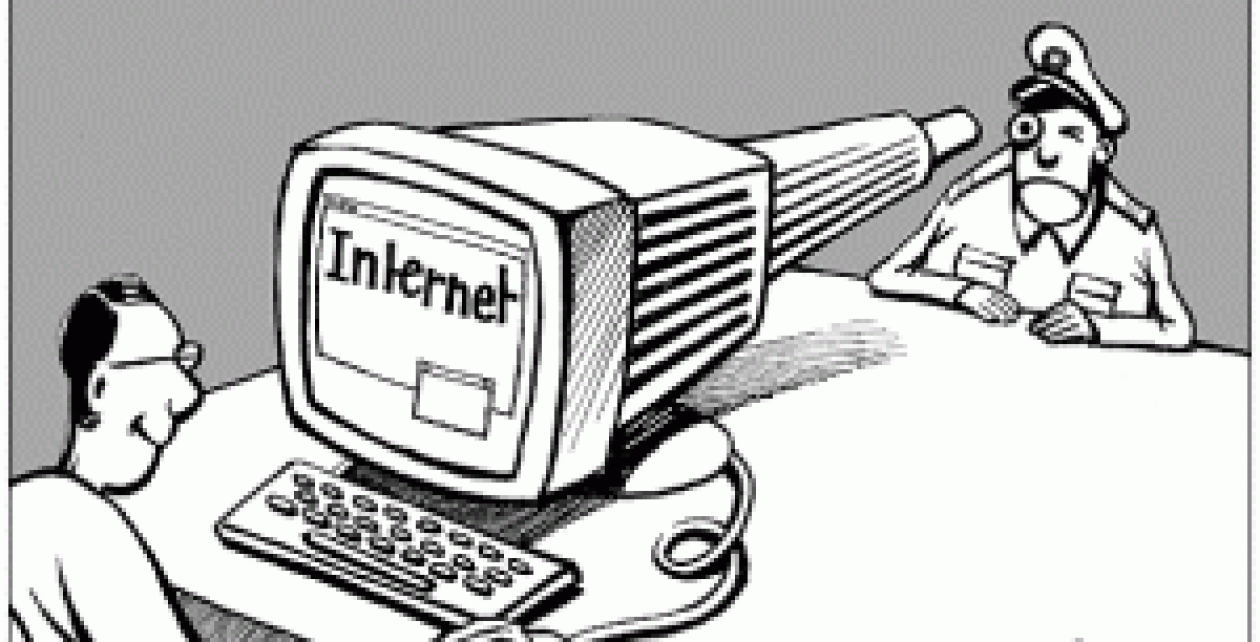
The history of internet censorship in Turkey is not simply a catalogue of websites that became inaccessible. It is a history of how blocking powers expanded, how content restrictions became an administrative routine, how communication networks were deliberately slowed down and how far judicial intervention succeeded—or failed—in restraining these practices.
This chronology begins with Law No. 5651 of 2007 and follows principal developments verifiable as of 15 October 2026. Access restrictions existed before 2007; I use that year because it marks the institutional consolidation of the legal framework. It is equally important to distinguish legislation, an administrative restriction, a judicial order, a technical network intervention and a later judgment finding a rights violation. They are not identical events.
2007 — Law No. 5651 and the foundation of a permanent blocking system
Law No. 5651, adopted on 4 May 2007 and published on 23 May, regulated internet publishing, the responsibilities of hosting and access providers, and the procedures for restricting material associated with designated offences. YouTube restrictions around the same period became early symbols of the disproportionate effects that platform-wide blocking could produce. The legal architecture would be expanded repeatedly in subsequent years. Consolidated text and amendment history.
2008–2010 — Extended YouTube blocking
Repeated restrictions on YouTube included a long period in which the platform was effectively inaccessible. The extended ban was lifted in October 2010. The fundamental problem was the attempt to resolve disputes about particular videos by preventing the public from accessing the whole service. This period later featured in the European Court of Human Rights case of Cengiz and Others v. Turkey. ECtHR judgment information.
It also coincided with my own early writing on online rights, including the 2010 question “Is There Censorship on the Internet?”.
2011 — The “Safe Internet” filtering controversy
A regulatory initiative by the Information and Communication Technologies Authority (BTK) prompted objections from civil society over mandatory internet filtering, transparency and state control of categories of acceptable content. Following criticism and changes to the proposal, the child and family filtering options introduced in November 2011 were voluntary. It would be historically inaccurate to describe the final system as a compulsory filter for all subscribers. The controversy nevertheless established a recurring question: who should determine what citizens may access online? US State Department’s 2011 country reporting.
18 December 2012 — Ahmet Yıldırım v. Turkey
The European Court of Human Rights found a violation of Article 10 of the Convention arising from an order that blocked access to other websites hosted on Google Sites in the course of restricting a particular site. The judgment highlighted the breadth of the interference and the inadequacy of legal safeguards against collateral blocking. ECtHR case summary.
May–June 2013 — Gezi Park and the struggle over public information
During the Gezi protests, social media became an essential channel for information when much mainstream broadcasting failed to cover the events adequately. Investigations and detentions also arose in relation to online posts. The internet became not only a communications infrastructure but a contested arena in which the public visibility of social events was determined. Freedom House · Human Rights Watch.
February–June 2014 — Expansion of Law No. 5651; Twitter and YouTube blocked
Amendments in February 2014, including Law No. 6518, modified the removal and access-blocking mechanisms of Law No. 5651. Access to Twitter was blocked on 20–21 March 2014, followed by YouTube on 27 March. Constitutional Court rulings on freedom of expression were followed by the restoration of access. This marked an important moment in the relationship between online platforms, political power and constitutional review. Human Rights Watch, events of 2014 · Law No. 5651.
2015 — Article 8/A and deliberate network throttling
Article 8/A of Law No. 5651 introduced additional procedures for urgent content removal and access restrictions justified on grounds including national security and public order. Reports of reduced access speeds to social platforms during major events signalled the emergence of a different kind of interference. In October 2015 I wrote about network neutrality and the throttling of Facebook and Twitter. Making a service effectively unusable without formally blocking its domain can have equally serious effects on communication. İFÖD’s throttling chronology.
1 December 2015 — Cengiz and Others v. Turkey
The European Court of Human Rights found that Turkey’s extended blocking of YouTube violated the right to receive and impart information under Article 10. The Court recognised that an online platform is not merely a distributor of material but an important forum for participation and access to information. ECtHR press release.
2016 — State of emergency and changes in institutional authority
Following the attempted coup of 15 July 2016, emergency measures had a far-reaching impact on journalism and communications. The Telecommunications Communication Presidency (TİB) was abolished, with major functions transferred within the BTK structure. The legal treatment of technical restrictions, including throttling, was also altered. Changing the name and location of regulatory powers did not eliminate censorship capabilities. İFÖD report · Amendment history.
29 April 2017 – 15 January 2020 — Wikipedia restricted, then restored
Access to Wikipedia across all language editions was blocked in Turkey beginning on 29 April 2017. The Constitutional Court found a violation of freedom of expression on 26 December 2019, and Wikipedia became accessible again on 15 January 2020. A dispute about specific material had effectively denied an entire country access to a global encyclopaedia for more than two and a half years. Constitutional Court statement.
2018–2019 — RTÜK extends broadcasting supervision online
A 2018 amendment adding Article 29/A to Law No. 6112 extended the legal framework for licensing internet-based radio, television and on-demand audiovisual services. The implementing regulation of 1 August 2019 detailed online licensing and supervision by RTÜK. Online content regulation was no longer confined to access providers and social media; a distinct licensing framework now covered certain forms of internet broadcasting. RTÜK regulation.
July 2020 — Law No. 7253 and obligations for social networks
Law No. 7253, adopted on 29 July 2020 and published on 31 July, defined social network providers as a legal category and introduced obligations involving local representatives, responses to applications, reporting and sanctions. The implications of compliance pressure for platform governance and expression became a central part of public debate. Grand National Assembly of Turkey, Law No. 7253.
2021 — The accumulated volume continues to grow
According to historical data compiled in subsequent EngelliWeb research, the cumulative number of domain names and websites blocked from Turkey reached 574,798 by the end of 2021. This is a count of identified domain-level restrictions under different legal grounds, not a count of political newspapers or cases involving journalists alone. EngelliWeb historical data.
13 October 2022 — The “disinformation” offence
Law No. 7418 introduced Article 217/A into the Turkish Penal Code, criminalising the public dissemination of certain false information under specified circumstances. The offence prompted concerns about legal certainty and the chilling effect of criminal enforcement on public discourse. In 2023 the Constitutional Court rejected the challenge seeking annulment; this outcome did not end the legal and social controversy. Turkish Penal Code · Constitutional Court press release.
2023 — Ekşi Sözlük and the Constitutional Court’s Article 9 ruling
Broad restrictions on the online discussion platform Ekşi Sözlük in 2023 sparked renewed debate about platform-wide blocks. Access was subsequently restored following Constitutional Court intervention, after approximately a year. On 11 October 2023, the Court also annulled the Article 9 regime in Law No. 5651 relating to blocking and removal of material said to infringe personality rights, citing constitutional deficiencies in the safeguards. The decision’s publication and effective date followed a separate timetable. Constitutional Court, E.2020/76, K.2023/172 · Human Rights Watch, 2026 overview.
August–October 2024 — Instagram, Roblox and Discord
Instagram was blocked on 2 August 2024 and access was restored on 10 August. Roblox was blocked on 7 August; Discord and Wattpad also faced restrictions in 2024. These restrictions affected more than leisure activities. Creators, software developers, small businesses and communities depended on the services for cultural and economic activities. Reuters, Instagram · Roblox’s statement · İFÖD overview.
March and September 2025 — Throttling during protests
Independent network measurements identified apparent deliberate throttling on several networks during 19–20 March 2025 and 8 September 2025, affecting services including X, Instagram, Facebook and YouTube. The Freedom of Expression Association documented a wider pattern of content removals, account restrictions and network interference. It identified 232,441 newly blocked domains and websites in 2025, bringing the cumulative count to 1,505,484 by the end of that year. OONI technical report · EngelliWeb 2025.
April–October 2026 — A new social-media age-verification framework
Amendments enacted through Law No. 7578 in April 2026 introduced new obligations relating to children’s access to social networks. A regulation published on 10 October 2026 set out a system involving age-verification tokens issued through an e-government-linked process. Providers must prevent access by children under 15 and offer differentiated services to users aged 15–17; age thresholds must also be demonstrated by adults. The regulation is scheduled to enter into force on 1 November 2026; unverified existing accounts have a 31 March 2027 transition deadline. As of 15 October 2026, these are enacted and published measures whose implementation date has not yet arrived, not already completed verification of all social-media accounts. Regulation reporting · Law No. 5651.
September–15 October 2026 — Blocking accounts, restricting news sites and taking control of broadcasters
The Freedom of Expression Association documented orders to restrict at least 1,270 X accounts in September 2026, including those of journalists, human-rights defenders and organisations monitoring censorship. An order dated 29 September also targeted the independent news site T24 and its X account. On 12 October, Human Rights Watch, ARTICLE 19, İFÖD and other organisations demanded an end to unlawful internet restrictions. On 14 October, authorities appointed a trustee to take control of Halk TV amid a criminal investigation, and broadcasting was suspended. The first group of measures concerns internet access; the last concerns control of a broadcaster through a different legal mechanism. They belong in the same historical discussion because of their cumulative implications for independent journalism. Joint human-rights statement · Associated Press, Halk TV.
What this history reveals
The early years of Turkish internet censorship were mostly visible through inaccessible websites. Today domain blocking, URL-level removal, geographic withholding of accounts, network throttling, coercive platform-compliance measures, criminal proceedings and mandatory age verification form a much more complex system of control.
This chronology does not claim that every access restriction is unlawful or that every piece of legislation serves an identical political objective. The legal concern is that restrictive powers have expanded and diversified without corresponding improvements in transparency, effective remedies, independent judicial supervision and verifiable privacy safeguards.
In 2007, the central question was which website had been blocked, and why. In 2026, we must ask a more fundamental question: To what extent will an individual’s ability to receive information, ask questions and participate in online debate depend on technical and administrative gates controlled by the state?
This is a record that will need updating as new legislation, court judgments and implementations emerge. Its purpose is to show that today’s debate did not begin yesterday.
Related commentary: Turkey Is No Longer a Democracy: From Internet Censorship to Digital Identity Controls.
Türkçe okuyun: Türkiye’de İnternet Sansürünün Kronolojisi (2007–2026).